
Most people hear "short positions" and think speculation. That is only one use.
In a more disciplined portfolio context, a short sleeve can also function as a risk-management tool, especially when the investor is sitting on appreciated longs they do not want to sell outright for tax reasons.
The problem this solves
What portfolio problem can a short overlay solve that a straightforward long-only sell cannot?
Sometimes an investor knows a position is too large, too risky, or too correlated to the rest of the portfolio, but selling it immediately is expensive — the short sleeve can help reshape that exposure without forcing a full liquidation decision.
That creates a familiar trap:
- holding the risk feels uncomfortable
- selling the risk feels tax-inefficient
A short sleeve can sometimes help reshape exposure without forcing a full liquidation decision on day one.
How the short sleeve functions
How does a short overlay actually reduce risk in a portfolio holding appreciated long positions?
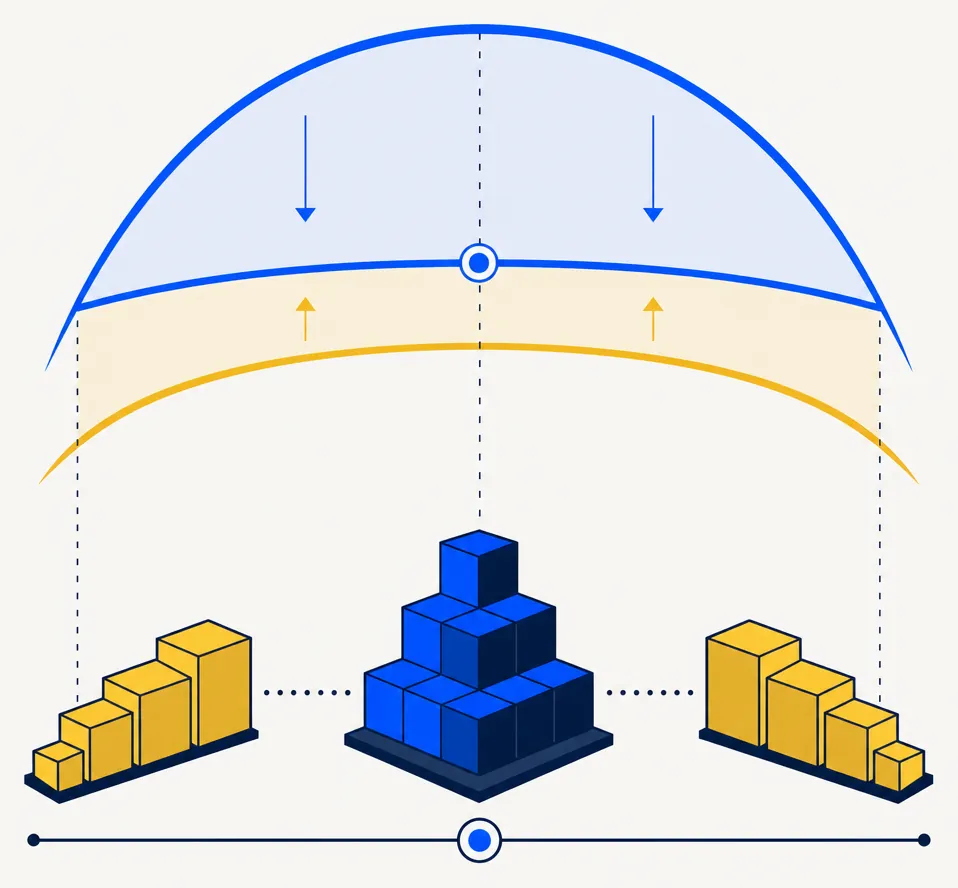
The short side is not magic insurance — it is a separate exposure layer that can offset or dampen parts of the long book, potentially reducing net market exposure, offsetting specific sector concentrations, or creating breathing room while a more tax-efficient unwind plan plays out.
Used carefully, that can help with:
- reducing net market exposure
- offsetting specific sector or factor concentrations
- creating breathing room while a more tax-efficient unwind plan plays out
What this is not
What are the real costs and risks investors should understand before using a short sleeve for risk management?
A short sleeve is not a free hedge — it brings borrow cost, financing drag, tax-character complexity, and gross/net exposure management requirements that make it clearly not a beginner feature.
Shorts bring their own costs and risks:
- borrow cost
- financing drag
- tax-character complexity
- gross and net exposure management
- the possibility of doing something clever-looking that is actually structurally messy
When it can be useful
What investor profile makes short-based risk management potentially worth the added complexity?
This approach becomes more relevant when the investor already has a meaningful taxable portfolio, embedded gains in long positions they do not want to liquidate carelessly, and enough sophistication to understand how the hedge changes the portfolio's overall behavior.
In those situations, the short sleeve can act as a temporary or ongoing risk-management layer while the long book is handled more deliberately.

Why this belongs after the basics
Why does a short overlay only add value when the long-only engine is already working well?
If the long-only engine is weak, adding a short sleeve does not make the system better — it makes it more fragile — which is why this feature belongs later in the product maturity curve, after long-only direct indexing, wash-sale handling, and portfolio-level risk controls are all solid.
That is why this feature belongs later in the product maturity curve, after:
- long-only direct indexing is solid
- wash-sale handling is solid
- portfolio-level tracking and risk controls are solid
What HarvestEngine should do here
How does HarvestEngine present the short overlay to users to keep the complexity visible and manageable?
HarvestEngine treats short-based risk management as a visible, gated, advanced mode where the user can see what risk is being offset, what new risks are being introduced, and what the expected tax and financing trade-offs are.
If the product cannot explain that clearly, it should not ask the user to trust it.
The bottom line
What is the core use case where short positions make sense in a tax-aware portfolio context?
Short positions are not only about trying to profit from decline — in the right setup, they can help investors manage risk around appreciated long holdings without forcing a crude sell-now decision, but only when both the investor and the software understand the full shape of the trade-off.
Read this next with short overlay, when it is worth it, the three sleeves, and concentrated stock and RSUs.