
Good tax-loss harvesting is not just about spotting a red number and clicking sell.
It is also about pacing. The losses you realize, the gains you choose to recognize, and the timing of replacement decisions all interact across the year. Investors who ignore pacing often end up with a weaker result than the headline TLH story implies.
The main idea
What is the core principle behind pacing tax-loss harvesting across the year?
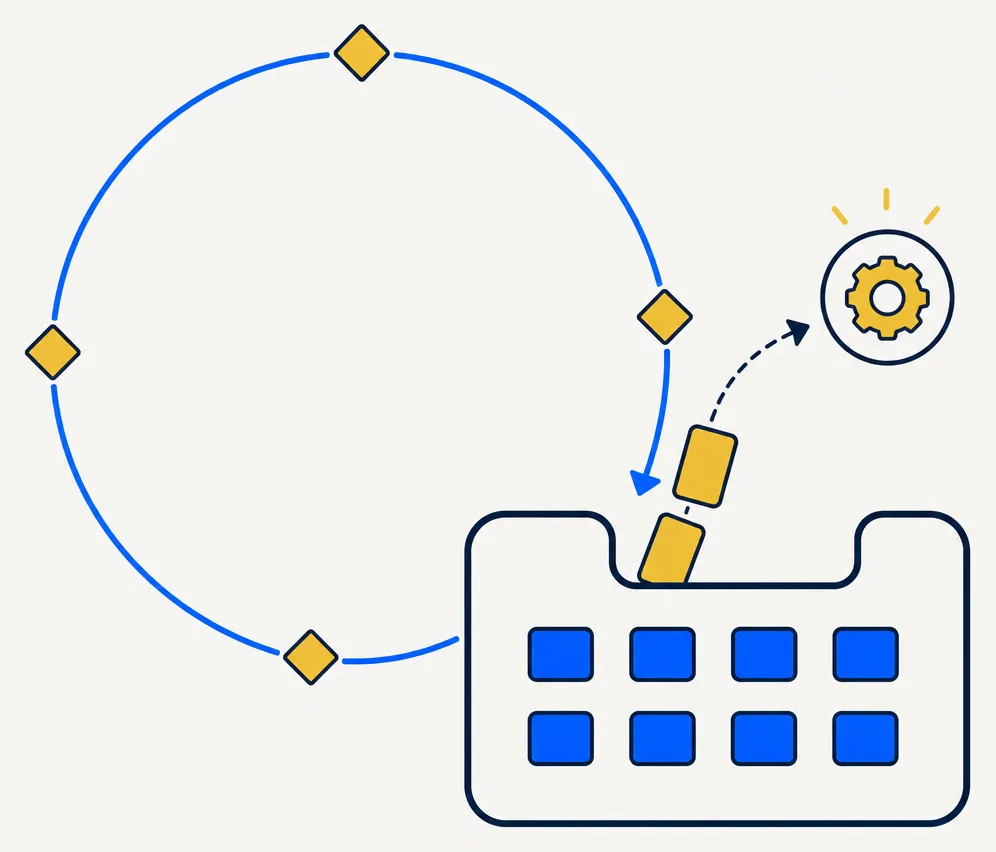
TLH works best as an operating rhythm — harvest losses opportunistically when the market gives them, then use the resulting loss bank deliberately rather than letting it sit without a plan.
That means two things:
- capture losses when the market gives them to you
- use the resulting loss bank intentionally, instead of letting it sit there without a plan
Why timing matters more than people think
Why does the timing of when you realize harvested losses and gains change the actual tax benefit you receive?
A harvested loss is useful, but its usefulness depends on context — if you have gains to offset, the value is immediate; if you do not, some of the value gets pushed into future years through the carryforward mechanism.
That does not make harvesting wrong. It means the investor benefits from thinking in tax-year and multi-year terms rather than in isolated trades.
The rhythm across the year
How does the optimal TLH strategy differ across early, mid, and late year?
Early year calls for planning and inventorying carryforwards; mid-year is for checking whether harvests are producing usable opportunities; late year should be deliberate cleanup and netting, not a reactive scramble.
Early year
The early part of the year is often when investors benefit from inventorying what they already have: prior carryforwards, existing gain plans, and what the taxable account is likely to need during the year.
This is where the planning mindset starts. Not with panic, with visibility.
Mid-year
Mid-year is the right time to ask whether the harvest process is producing usable opportunities and whether the portfolio is drifting in a way that may create later tax or rebalancing decisions.
This is also where software can help show the difference between paper opportunities and a realized usable loss bank.
Late year
Late year is where many investors make the same mistake: they wait too long, then rush. That often leads to lower-quality replacement decisions, bad timing around wash-sale windows, or forced moves that feel more reactive than strategic.
Year-end benefits from being used for cleanup and deliberate netting, not desperation.
The bigger decision hiding underneath
What is the most important pacing decision a tax-loss harvester actually makes across the year?
The most important pacing question is often not when to harvest a loss but when to realize a gain — because a loss bank paired with the right realization timing is far more valuable than a growing carryforward with no intentional use plan.
If the investor has built a meaningful loss bank and also has appreciated positions they already wanted to trim, diversify, or rebalance, that is where the real planning value appears.
That is why pacing matters. A loss bank with no intentional use plan is still helpful, but a loss bank paired with the right realization timing is much better.

The common mistake
What is the most common pacing mistake investors make with an accumulating TLH loss bank?
The common mistake is building losses passively and never using them intentionally — a large loss bank can be powerful, but it is most valuable when paired with future decisions the investor actually wants to make.
The investor sees a growing carryforward and thinks that alone means the strategy is working at full strength.
Not necessarily. A large carryforward can be powerful, but it is most valuable when it is paired with future decisions the investor actually wants to make.
What HarvestEngine should make visible
What information does a tax-aware portfolio product need to surface to make pacing decisions practical?
A serious product helps the user understand what has already been realized, how much loss bank exists, what gains could be offset if chosen to realize them, and which wash-sale timing and replacement windows still matter this year.
That is how you turn TLH from a mechanical feature into a planning system.
The bottom line
Why is a disciplined annual pacing rhythm more valuable than simply harvesting every available loss as it appears?
Tax-loss harvesting works best when paced, not rushed — losses are inventory and gains are something to realize intentionally when the year is right, which is the difference between doing TLH and actually running a tax-aware portfolio.
Read this next with gain-offset planning, tax alpha explained, concentrated stock and RSUs, and Roth conversions and TLH.