
Direct indexing gets marketed like a universal upgrade. It is not. For the right investor, it is structurally better than holding a single ETF. For the wrong investor, it is just more moving parts.
The honest question is not, "Is direct indexing good?" The honest question is, does direct indexing make sense for this account, this tax profile, and this time horizon?
What direct indexing actually is
What is direct indexing and how does it differ from owning a single ETF?
Instead of owning one ETF that tracks an index, you own a basket of the underlying stocks directly — keeping the benchmark exposure while creating many separate tax-lot opportunities rather than one.
- ETF: simpler, tighter tracking, fewer moving parts
- Direct indexing: more complexity, more tax flexibility, more opportunities to harvest losses
If you only remember one thing, remember this: direct indexing is a tax and control upgrade, not a magical return upgrade.
The three variables that decide the answer
1. Account size
How does account size determine whether direct indexing makes sense?
Account size is one factor in whether direct indexing makes sense, but it is not a standalone recommendation. The practical fit depends on the account's holdings, tax profile, time horizon, and tolerance for added complexity.
2. Tax rate
Direct indexing is far more valuable in a taxable account for someone who actually pays meaningful capital-gains tax. If your capital-gains rate is effectively zero, the urgency drops a lot.
The higher the combined federal and state tax rate, the more valuable harvested losses become. This is why direct indexing is especially compelling for high-income investors in high-tax states.
3. Time horizon
Direct indexing works best when the account is intended to compound for years, not months. The real value is not one clever harvest. It is a repeated process that builds a loss bank, defers gains, and compounds tax efficiency over time.
Short horizon, little benefit. Long horizon, much better economics.
When a plain ETF is honestly better
When is a plain ETF genuinely the right answer instead of a direct-index sleeve?
Sometimes the boring answer is the right answer — particularly when the account is small, taxes are low, the holding period is short, or simplicity is the primary goal.
- You have a small taxable account.
- You are in a very low tax bracket.
- The assets are mostly in retirement accounts.
- You value simplicity more than tax optimization.
- You may need the money soon.
In those cases, an ETF is not a compromise. It is the cleaner tool.
When direct indexing becomes structurally better
What profile makes direct indexing the structurally stronger choice for a taxable investor?
The strongest profile is straightforward: meaningful taxable assets, a high enough tax rate for harvested losses to matter, a multi-year time horizon, and willingness to let software handle a more sophisticated portfolio process.
- meaningful taxable brokerage assets
- high enough tax rate for harvested losses to matter
- multi-year time horizon
- willingness to let software handle a more sophisticated portfolio process
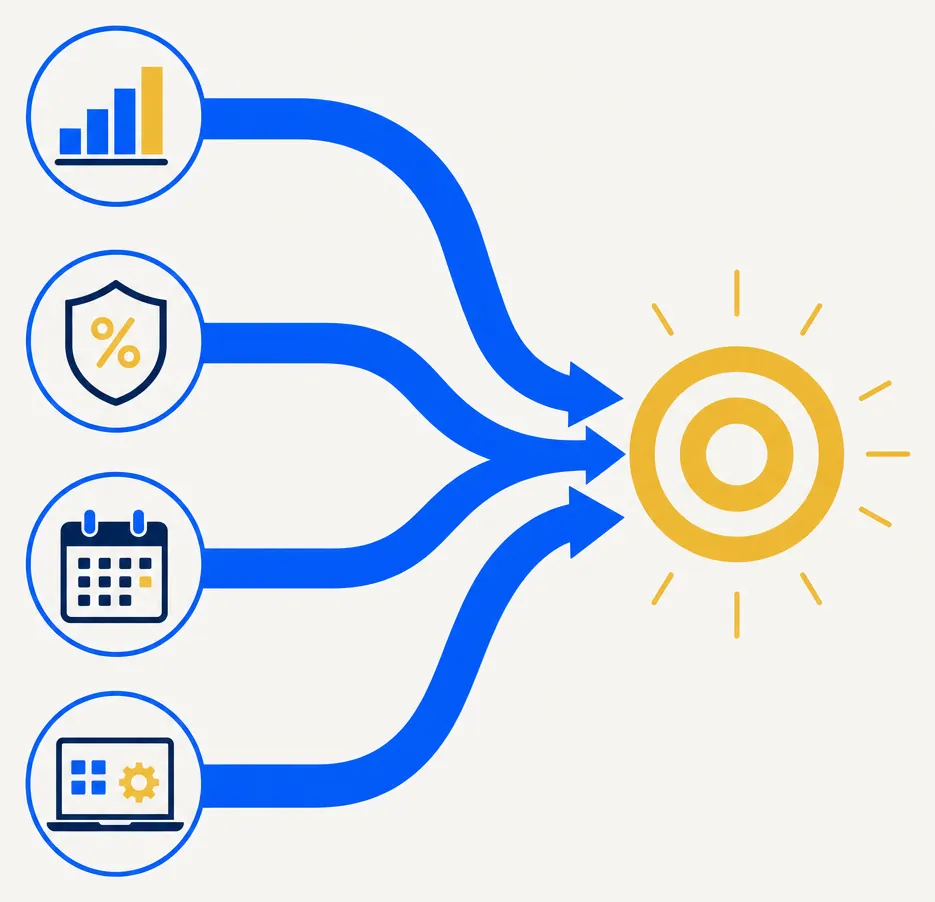
For that investor, direct indexing may be a better fit for one simple reason: one ETF gives you one position, while a direct-index sleeve gives you dozens of positions — dozens of ways to harvest losses while keeping the overall market exposure close to the same target.
The hidden mistake people make
What is the most common mistake investors make when comparing direct indexing to a plain ETF?
Many investors compare a direct-index sleeve to an ETF only on pre-tax return. That misses the point entirely — the value is in the tax surface, not in trying to beat the benchmark.
The useful comparison is:
- ETF with minimal complexity and minimal harvest surface
- Direct-index sleeve with slightly more complexity and much more tax surface
If the account is large enough and taxable enough, the tax surface may win.
What this means for product design
What separates a serious direct-indexing product from one that just substitutes individual stocks for an ETF without a real portfolio system?
A serious direct-indexing product needs to help answer the real portfolio questions — not just hold 80 names and hand the investor a spreadsheet of positions.
- How closely does this sleeve track the benchmark?
- How much harvest surface am I actually creating?
- What is the tax value versus the operational cost?
- What does the replacement logic look like when losses appear?
That is where the difference between a brochure and a real portfolio system starts to show.

My honest take for 2026
Who benefits most from direct indexing in 2026, and when is the upgrade genuinely worth it?
Direct indexing is not for everyone. But for a self-directed investor with real taxable assets, it is usually one of the clearest available upgrades — because it improves something ETFs structurally cannot: tax-lot granularity.
That is exactly why HarvestEngine exists. It is built for the investor who wants the tax-aware machinery without handing over custody, visibility, and a percentage of the account every year.
Read this next with TLH 101, TLH vs ETF rebalancing, and the founder story.